Warning! You Could Face Fines for Using AI-Generated Voice
A bill before Turkey's Grand National Assembly would require labels on AI-generated video and audio content, with fines of up to 10 million TL for non-compliance.

2 min read
Fines for Unlabeled AI Video: The Bill Before Parliament in 8 Questions
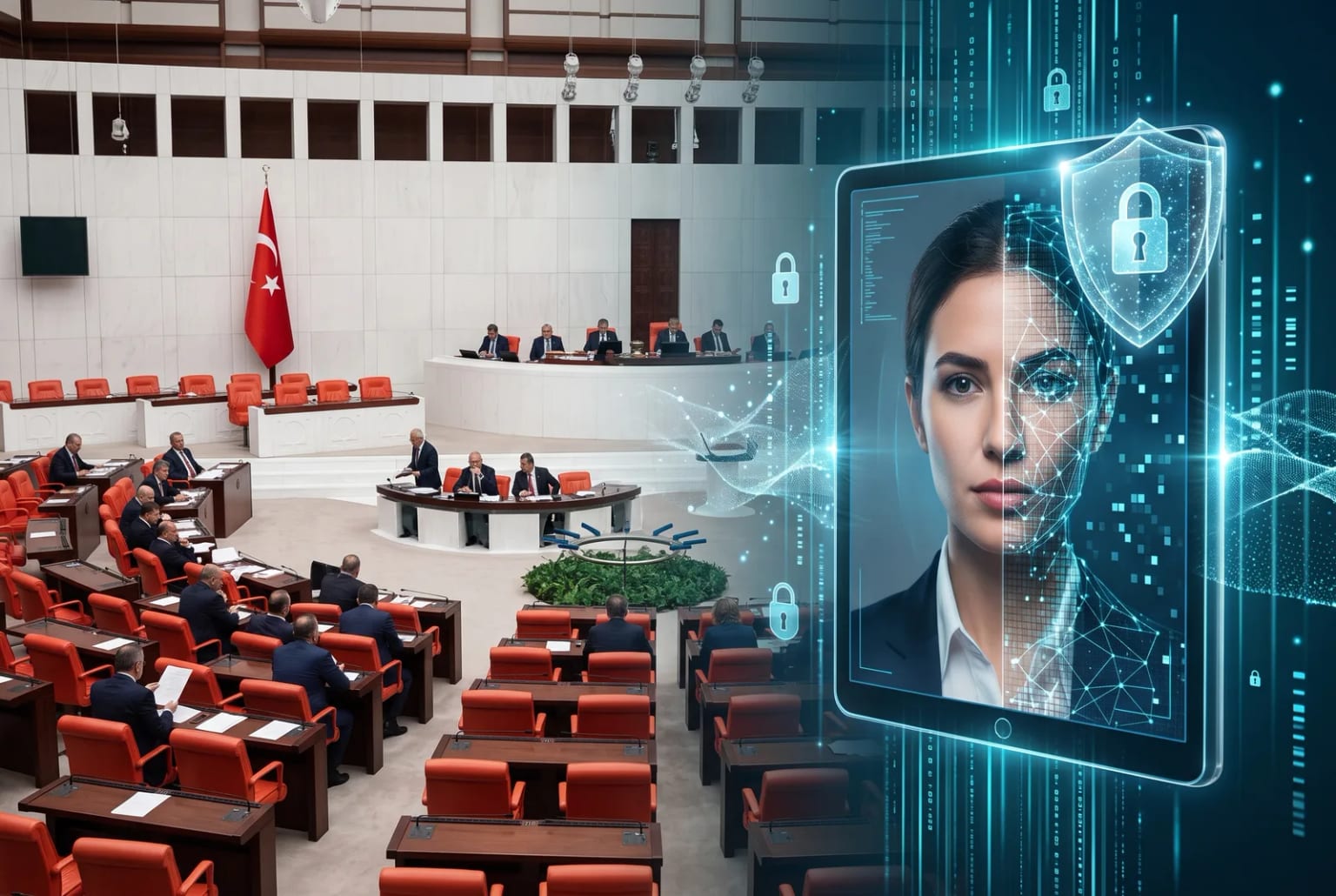
AI-generated deepfake videos and synthetic audio recordings have made it onto the Turkish legislature's agenda. A bill currently awaiting action in the Grand National Assembly proposes mandatory labeling for such content and steep financial penalties. Here is what the bill says, summarized in eight questions.
When was the bill submitted, and by whom? It was submitted to the Grand National Assembly on November 7, 2025, by Halil Öztürk, MHP Member of Parliament for Kırıkkale. The eleven-article text proposes amendments to several laws, most notably the Turkish Penal Code. It is regarded as one of the first comprehensive legislative initiatives in Turkey to directly target artificial intelligence.
What problem is it trying to solve? Deepfake videos, hate speech, and synthetic content designed to mislead the public. The bill's explanatory memorandum states that these have now become a security issue. Today, a few seconds of audio or a single photograph are enough to show a person saying things they never said — and the bill is drawn up precisely to address that risk.
How would the labeling requirement work? AI-generated videos would be required to carry the notice "produced by artificial intelligence." Content providers or developers who fail to include this notice could be fined between 500,000 TL and 5 million TL by the Information and Communication Technologies Authority (BTK), depending on the nature of the content. In other words, even a video shared on social media for entertainment purposes could fall within scope if it is unlabeled.
How quickly would reported content have to be taken down? Within six hours. This deadline applies to content that violates personal rights, threatens public safety, or is produced using deepfake technology. The tight timeframe is intended to stop a fake video from spreading before it can cause harm.
Who bears responsibility? Not only the person who shares the content, but also the developer of the AI system behind it. In addition, datasets used to train AI systems would be subject to anonymization and non-discrimination requirements; using a discriminatory dataset would be treated as a data security breach.
What powers would be granted to BTK? The authority could impose emergency access blocks on content that threatens public order or election security. Administrative fines of up to 10 million TL are foreseen for non-compliance. Where there is intent to engage in political manipulation or to damage personal rights, a criminal complaint to the public prosecutor's office could also be filed.
What is happening elsewhere in the world? Turkey is not alone on this issue. In the European Union, the obligation to clearly disclose that deepfake content is artificially generated entered into force on August 2, 2026. Denmark, meanwhile, brought a bill before its parliament in October 2026 that would ban the unauthorized imitation of a person's face and voice.
Is it in force yet? No. The text is still at the proposal stage; none of these penalties apply until the bill is passed by Parliament. Even so, content creators would be wise to get into the habit of clearly labeling work they produce with the help of artificial intelligence right now.
Sources
- #AI
- #fines
- #deepfake
- #regulation
- #Turkey